
|
 |
 |
|||||||||||||||||||||||||||||||||||||
| ||||||||||||||||||||||||||||||||||||||
 |
 |
 02-09-2011, 03:41 PM
|
#3 | ||||||
|

Any possibility that the extra 2 diamonds were added later? The points of the 2 large diamonds look like they would meet at the center of the bar latch which would be correct if it follows a 2 point diamond pattern as seen on later date forarms. It wouldn't be hard to add 2 smaller diamond patterns to the existing pattern. If it was done, it would have been long long ago.
|
||||||

|

|
||||||
 |
 |
 |
|
Hard Gun to Grade | |
|
02-09-2011, 05:44 PM
|
#4 | ||||||
|
Hard Gun to Grade
A good checkerer could have certainly married the diamonds but this just the beginning. Mark had a hard time trying to grade this gun from the order book material as shown in the letter. I think it becomes more difficult to grade after seeing it.
The plain twist barrel set is numbered with 2 on both barrel and fore end iron. The other set is damascus and not numbered. This set carries the 4 diamond checking, and has an insert in the hinge. The frame has some engraving and some sculpturing around the fences; not much like a plain twist lowest grade gun. A later (1878) price list shows three grades of twist; was there briefly a grade 2 twist gun? The grain in the butt is much like grade 2 of the time. Determining the grade of this particular gun might change its value from $0.10 a pound to 0.09 or 0.11. However grading early guns is a frequent question here. I think it is time for a Parker Pages series on grading. Best, Austin |
||||||
|
|
|
||||||
|
|
|
|
|
|
02-09-2011, 05:57 PM
|
#5 | ||||||
|
Austin,We know that many peculiar features are present on the early Parker guns almost as though the factory was searching for what would become standard. With King's arrival at the gun works things seamed to settle down.This gun looks to me to be a grade 2 gun. But it's only a guess.
__________________
"Much care is bestowed to make it what the Sportsman needs-a good gun"-Charles Parker |
||||||
|
|
|
||||||
|
|
|
|
|
|
02-09-2011, 07:01 PM
|
#6 | ||||||
|
Austin,
It seems by the letter that the Twist barrels were ordered in 1880, also explaining the "2" stamping. The Damascus barrels are the original set, listed in error in the books. I would guess a $100.00 dollar grade on up, by descriptions in the 1874 Reduced Price List. How would you describe the rest of the gun? Type of walnut, etc? Another thing to try is look for a grade number stamped near the serial number, in the wood underneath the trigger guard. I realize that Parker Brothers did not have a grading number system in place in 1875, but they were working on it for the future. I used to own #3313, made in 1874, which had such a number stamped in the wood. Dave |
||||||
|
|
|
||||||
|
|
|
|
Grading Early Guns | |
|
02-09-2011, 08:32 PM
|
#7 | ||||||
|
Grading Early Guns
I agree with everyone, but would like to draw this out a little. I have always set a value that the lowest grade damascus gun was a grade 2. This was supported by three diamonds in the fore end checking pattern, and a little figure on one side of the butt.
Could barrel 1 really be barrel three? Interesting especially since the two existing barrel sets still match weight. The lock engraving seems to have been roll marked, then chased. Was roll mark engraving being considered for grade 1? How would you assess the dominating factors on grade determination: Barrel Steel? Engraving? Frame Sculpture? Wood Quality? Checking pattern? A grade number found on any original part could nullify all these? We need some good examples and opinions for Summer Parker Pages Best, Austin |
||||||
|
|
|
||||||
|
|
|
|
|
|
02-09-2011, 08:37 PM
|
#8 | ||||||
|
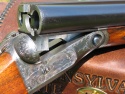
The Forend checkering pattern for the grade 2 guns was already established prior to the production of Parker 4361. Therefor, I submit this gun (4361) was a higher grade. Here are a couple of pictures to substantiate my theory. This one is identified as F.9.R., B2505
. |
||||||
|
|
|
||||||
|
|
|
|
|
|
02-09-2011, 09:00 PM
|
#9 | ||||||
|
As barrel steel can really only help in determining grades 0, 1, and 2 (higher grades in these earlier lifter guns were usually always Damascus with the possible exception of Whitworth late in the lifter range)(exceptions to this rule would be such rare examples as English Laminated as seen on certain lifters) I would rate frame sculpture and level of engraving very high at pos. 1 & 2 (or 2 & 1) followed closely by checkering pattern with wood quality (being very subjective) following the pack.
Agreed that a grade number would nullify all the above. |
||||||
|
|
|
||||||
|
|
|
|
|
|
02-09-2011, 09:23 PM
|
#10 | ||||||
|
Well now, here's some sand in the gears of this discussion. Just saw this one posted on gunbroker a minute ago.
This is Parker No. 1372 with the grade 2 forend checkering but with Laminated Steel barrels. Too early for standardization??? . |
||||||
|
|
|
||||||
|
|
|
 |
|
|




 Linear Mode
