
|
 |
 |
|||||||||||||||||||||||||||||||||||||||
| ||||||||||||||||||||||||||||||||||||||||
 |
 |
 06-01-2021, 11:39 AM
|
#23 | ||||||
|

These Tennessee guys didn't by any chance have the last name "Clampett", did they??

|
||||||

|

|
||||||
 |
 |
 |
|
|
|
06-01-2021, 12:59 PM
|
#24 | |||||||
|
Quote:
It often seemed to me that they were horseback trial "wannabes." There was also a term that was used for a dog that found lots of birds, but did not run out of sight or point with the rigid high tail. Those were called "meat dogs." It was frequently used in reference to any non-English Pointer/Setter. In the trial circles, those dogs were held is disdain, but on the side, guys would ask if they could hunt with their owners. The eye of the beholder is sometimes fickle, but a dog that loves his business and produces birds for his master is a jewell, and if his looks meet his master's aesthetic sensibility, he's a winner in my book.
__________________
"Doubtless the good Lord could have made a better game bird than bobwhite, and better country to hunt him in...but equally doubtless, he never did." -- Guy de la Valdene (from A Handful of Feathers ) "'I promise you,' he said, 'on my word of honor, I won't die on the opening of the bird season.'" -- Robert Ruark (from The Old Man and the Boy) |
|||||||
|
|
|
|||||||
|
|
|
| The Following 8 Users Say Thank You to Garry L Gordon For Your Post: |
|
|
|
06-01-2021, 01:07 PM
|
#25 | ||||||
|
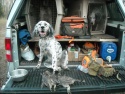
Deans "chair dogs" look like how I feel after getting my Covid shots!
|
||||||
|
|
|
||||||
|
|
|
| The Following User Says Thank You to Richard Flanders For Your Post: |
|
|
|
06-09-2021, 09:29 AM
|
#26 | |||||||
|
Quote:
FYI if anyone can watch the YouTube channel on their internet TV you can search for "grouse hunting" or any other type of hunting I imagine, and find show after show of hunters in the grouse woods.
__________________
"Training is like fighting a gorilla, you don't stop when you are tired, you stop when the gorilla is tired" |
|||||||
|
|
|
|||||||
|
|
|
| The Following User Says Thank You to Reggie Bishop For Your Post: |
|
|
|
06-09-2021, 12:07 PM
|
#27 | ||||||
|
Well said Garry!
__________________
"How kind it is that most of us will never know when we have fired our last shot"--Nash Buckingham |
||||||
|
|
|
||||||
|
|
|
| The Following User Says Thank You to Harold Lee Pickens For Your Post: |
|
|
|
06-16-2021, 12:53 AM
|
#28 | ||||||
|
Reggie:
I did view a couple of Maine Grouse hunt videos on YouTube last night, filmed by a two-man team (no dogs). Nice camera work, beautiful country, and a variety of game was depicted. Right off, I noticed that the camera was not showing birds getting up -- that is, until the first shots were fired. And the guns were usually angled down and held steadily and aimed toward the brush like a rifle at the first shot, maybe raised or swung for the second. The occasional wing-shot was duly-noted. Being out there, harvesting for the daily limit, cooking and enjoying the fare at the end of the day, and sharing the experience, was the object. The punctilio of how the shooting was accomplished was absent. Not much point, for those who seek to acquire guns specifically built for shooting on the wing, and practice on moving clay targets with them in the off-season, to culminate in a test of gun and skill on flying birds. Different strokes.
__________________
"First off I scoured the Internet and this seems to be the place to be!” — Chad Whittenburg, 5-12-19 |
||||||
|
|
|
||||||
|
|
|
| The Following 3 Users Say Thank You to Russell E. Cleary For Your Post: |
|
|
|
06-16-2021, 07:37 AM
|
#29 | ||||||
|
Russell, are you saying they were shooting grouse in any presentation, be it on the ground or in the air?
.
__________________
"I'm a Setter man. Not because I think they're better than the other breeds, but because I'm a romantic - stuck on tradition - and to me, a Setter just "belongs" in the grouse picture." George King, "That's Ruff", 2010 - a timeless classic. |
||||||
|
|
|
||||||
|
|
|
|
|
|
06-16-2021, 09:36 AM
|
#30 | ||||||
|
Dean:
Yes. As soon as the Grouse was seen, be it on the ground or in a tree, it was shot at. If missed and thereupon flying, it was shot at again.
__________________
"First off I scoured the Internet and this seems to be the place to be!” — Chad Whittenburg, 5-12-19 |
||||||
|
|
|
||||||
|
|
|
| The Following User Says Thank You to Russell E. Cleary For Your Post: |
 |
|
|



 Linear Mode
