
|
 |
 |
|||||||||||||||||||||||||||||||||||||||||||||||||||||||||||||
Visit Brian Dudley's homepage! | | |||||||||||||||||||||||||||||||||||||||||||||||||||||||||||||
 |
 |
 11-28-2020, 04:11 PM
|
#43 | ||||||
|

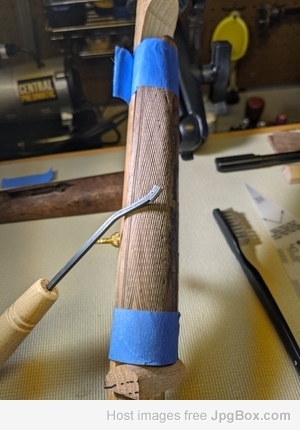
I agree. This is my practice forend. Amazing how the cutter head has a mind of its own. Parker in the background. I am still trying to get my head around fixing the barrel border divot as described by Craig.
|
||||||

|

|
||||||
 |
 |
 |
|
|
|
11-28-2020, 04:14 PM
|
#44 | ||||||
|
Ok, clearly not the dowel but am I getting the idea? Use the actual walnut grain matching dowel to sand the barrel tunnel to have it's margin blend into the walnut dowel. Then using only a sliver of that dowel, glue it in and shape away any part to create a new barrel tunnel? Am I even close in my understanding?
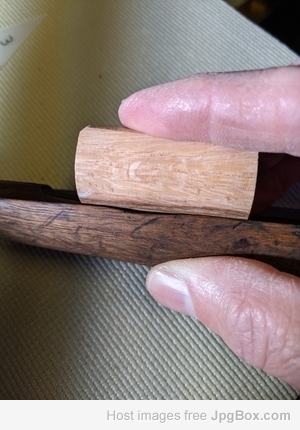 (Read Craig's response below. The orientation of the dowel is off 90 degrees) |
||||||
|
|
|
||||||
|
|
|
| The Following User Says Thank You to Cameron Thraen For Your Post: |
|
|
|
11-28-2020, 04:22 PM
|
#45 | ||||||
|
Just a note to those interested. The checkering on this 1893 G grade Parker appears to be 22 lpi.
|
||||||
|
|
|
||||||
|
|
|
|
|
|
11-28-2020, 06:44 PM
|
#46 | ||||||
|
You have not got it. The cylinder of wood is perpendicular to the forend iron and is at a 45 degree angle to the plane formed by the centerline of both bores. Take a concave cardboard template of the 1 1/2 dia. and place it below the divot, so that all the damage is exposed, then draw a pencil line below it using the template as your guide. the area above the pencil line is the part your going to replace. By sanding at a 45 you reduce fitting time, it reduces mistakes, and is easier to hide. Matching the wood and grain are as important as the fit of the sliver. If you have an old buttstock,that matches, take a 1 1/2" holesaw and drill a hole through it. The waste will provide you with your sliver. Good Luck!
|
||||||
|
|
|
||||||
|
|
|
| The Following 2 Users Say Thank You to Craig Budgeon For Your Post: |
|
|
|
11-28-2020, 07:14 PM
|
#47 | ||||||
|
Craig, now I think I have the image in my head. I was fixed on adding a sliver along the axis line of the forend margin. And I now understand why a walnut dowel will not work. I have a supply of walnut 1" blanks that I will use to cut out my 1.5" piece. I will mock up what I now visualize and post a photo before proceeding. Again thanks for your time and help.
|
||||||
|
|
|
||||||
|
|
|
| The Following User Says Thank You to Cameron Thraen For Your Post: |
|
|
|
11-30-2020, 03:14 PM
|
#48 | ||||||
|
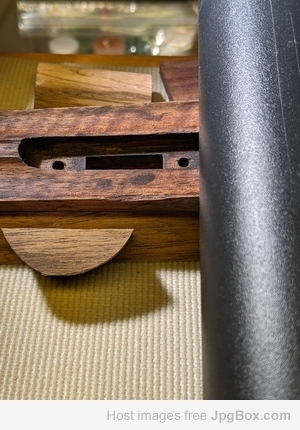
Craig, in the photo: on the right the 1.5 " diameter tool to sand the divot at 45 degrees. On the left the stock for the sliver to be glued in the sanded divot and shaped. Looking at the photo do I have this correct? If I now have it correct I will practice on an orphan forend piece before any attempt on my Parker wood. It is a long winter here and I have time to go slow.
|
||||||
|
|
|
||||||
|
|
|
|
|
|
11-30-2020, 05:23 PM
|
#49 | ||||||
|
Cameron, it looks like you are headed in the right direction. However your sliver selection could be improved color wise. I do understand that photographs can be misleading and you are the final judge.
|
||||||
|
|
|
||||||
|
|
|
| The Following User Says Thank You to Craig Budgeon For Your Post: |
|
|
|
11-30-2020, 08:31 PM
|
#50 | ||||||
|
Craig, working on the color match. There is a shadow on the forend making it appear much darker. I have another question. Is the glue side of the sliver cut to match the angle of 45 degrees of the radius after sanding out the divot? Makes sense to me but I am not clear on this point.
|
||||||
|
|
|
||||||
|
|
|
 |
|
|


 Linear Mode
