
|
 |
 |
|||||||||||||||||||||||||||||||||||||||||||||||||||||||||||
| ||||||||||||||||||||||||||||||||||||||||||||||||||||||||||||
 |
 |
 12-14-2009, 03:15 PM
|
#3 | ||||||
|

I think the only difference between VH and GH checkering on a straight grip Parker is the LPI.
|
||||||

|

|
||||||
 |
 |
 |
|
Straight Grip Checking | |
|
12-14-2009, 03:40 PM
|
#4 | ||||||
|
Straight Grip Checking
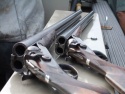
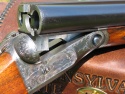
Harry; the gun pictured is a PH with a very high comb; it is the one with owners notes under the pad shown in Parker Pages about 10 years ago.
With respect to your question, I just put the PH, a VHE straight grip trap, and an SC straight grip side by side. The patterns are the same except for an extra point in the middle on the Vee on the SC. Mery Christmas; Austin |
||||||
|
|
|
||||||
|
|
|
|
|
|
12-14-2009, 04:33 PM
|
#5 | ||||||
|
Thanks Austin, I will send the pictre along with the Parker. The stock of the VH 20 gauge is going long as well so they have an example of the upper portion of the checkering. The toe is chipped on the 20 stock and I'm having it repaired with he addition of a Silvers pad as the LOP is 13". It is inletted for the butt plate toe, but does not have the original butt plate. Otherwise I would just use a pull on pad.
Harry |
||||||
|
|
|
||||||
|
|
|
|
|
|
12-14-2009, 05:11 PM
|
#6 | ||||||
|
Even though Harry isn’t looking for this information, I just measured the pitch on my 2 straight gripped Parkers.
The 1882 D grade hammergun has a drop at the heal of 2 3/8” and 4 degrees of pitch. The 1903 DH has a drop at the heal of 2 ¼” and 2 degrees of pitch. I measured the pitch using the shotguncombo guage I won in this years raffle. The main beam of the combo guage sits on the rib and an extension piece mounted on the beam is extended down to contact the surface of the butt. A protractor is used to measure the angle. I can tell you that if your shotgun recoils into your cheek bone, the usual reason is the toe of the stock is digging into your chest instead of the entire butt surface making equal contact with your chest. This pivots the stock upward during recoil. The DH has just a little bit of muzzle jump into my cheek. Measuring the pitch using the wall method can introduce many variables. How many have checked to see if the floor and wall are exactly 90 degrees all the way up the wall? I guess if you just want to compare all your guns and use the same spot for measurements, that’s OK, but you can’t be sure that the guy doing the cutting on your buttstock has the same configuration. Also if you use this method, I’d recommend taking the recoil pad off and going against bare wood. |
||||||
|
|
|
||||||
|
|
|
|
Gun pitch and shooting styles-- | |
|
12-14-2009, 08:21 PM
|
#7 | ||||||
|
Gun pitch and shooting styles--
Both Bill Murphy and Dean Romig have, from my limited experience, the right concept of an accurate measurement using a door frame that is plumbed to a perfect 90 degree angle from the jamb to the sill plate-It is also true that two 12 gauge VHE's stocked with identical dimensions, but one with 26" barrels, the other with 30" barrels, will show a difference in pitch when so measured, if you measure both from the muzzles and the resultant "stand-off" from the vertical door jamb.
To my way of thinking, pitch affects more the type of field shooting you will do with a certain shotgun. I go back to my "Bible", Captain Paul A. Curtis' book "Guns and Gunning" Penn. 1934- his comment about the confirmed rabbit hunter using a gun with a greater drop and downpitch than his friend a confirmed quail hunter may well ring true, even today. And Trap and Live Bird guns are often stocked with very little pitch and drop at heel and comb, to give a built in elevation in pattern to typical rising and going away targets. Also the style in which you mount your gun(s) may also affect the best pitch, etc. for you. I have studied by book and video the H&H Ken Davies mounting style, and use that for SC and when shooting Tower birds- most of those shots may duplicate the incoming and driven birds the British encounter, and their economy of movement, feet and hip rotation and fixing the eyes on the bird or clay and only seeing the muzzle and sight bead as a blur are very worthwhile. Hunting waterfowl from field blinds, pits or layout boats, where the birds may be dropping their feet at first shots, then rising after the shots are fired, IMO, calls for slightly different LOP, DAH and pitch in my waterfowl guns. I also like solid Hawkins or older Silvers/Winchester 1922 patented pads on my guns, especially those for waterfowling and Tower birds. LOP wasn't discussed as much here, but the shape and placement of the triggers and grip style on a certain gun can also be a factor. Gloved hands or not, also a factor in gun fit worth noting. There are so many variables in getting good gun fit, the one thing that remains a constant however, we all are going to miss, but good fit, including the pitch of your stock, can cut the miss column down considerably. Last edited by Francis Morin; 12-14-2009 at 09:22 PM.. Reason: correct spelling error |
||||||
|
|
|||||||
|
|
|
|
|
|
12-15-2009, 02:51 AM
|
#8 | ||||||
|
By using the "wall method" the only number that will change is the pitch as measured in inches and this number is of course, dependant only on the length of the barrels, not the LOP. However, the angle of pitch remains constant.
Of course, as the LOP increases so does the DAH. |
||||||
|
|
|
||||||
|
|
|
| The Following User Says Thank You to Dean Romig For Your Post: |
|
|
|
12-15-2009, 12:28 PM
|
#9 | ||||||
|
The only thing about some of the comments that is correct is that both methods will work. Length of stock and drop at comb or heel don't make any difference at all, using either method. The length of the barrel also . .makes very little difference. At a two inch pitch, the difference between pitch on a 26" and a 30" barrel is about 1/4 inch. Dean is the only poster who came up with the correct factors that affect pitch. We can start to use the angle of pitch method (which Austin claims is quicker??) when we all own combo gauges and can find our protractors. Even Chuck didn't own a combo gauge until he won one. I will never own one. Quicker than sliding a shotgun against a door frame?
|
||||||
|
|
|
||||||
|
|
|
|
|
|
12-15-2009, 01:17 PM
|
#10 | ||||||
|
This is all very interesting but I'm confused. First, I can measure several of my guns and unless they have the same barrel length I wouldn't know if the "pitch" is the same or not from one to the next. Don't we need to go the next step and compute the actual angle using a little trig (sin of distance from wall divided by barrel length)?
Second, what do I do with this information? Is Pitch like the Length of Pull and I should know what is best for me and try to get all my guns to that measurement? Or, does it depend on what I'm hunting (shooting position)? Or is this to be left to the pro shooter and not for me? I have listened to many discussions on LOP, cast, drop but this is my first time listening about pitch. I think I understand the computation methods but I don't know what one would do with this data? If I wanted to take pitch into account how do I know what is right for me? |
||||||
|
|
|
||||||
|
|
|
 |
| Thread Tools | |
| Display Modes | |
|
|






 Hybrid Mode