 |
|
 |
|
 |
|
 |
| Notices |
Welcome to the new PGCA Forum! As well, since it
is new - please read the following:
This is a new forum - so you must REGISTER to this Forum before posting;
If you are not a PGCA Member, we do not allow posts selling, offering or brokering firearms and/or parts; and
You MUST REGISTER your REAL FIRST and LAST NAME as your login name.
To register:
Click here..................
If you are registered to the forum and keep getting logged
out: Please
Click Here...
Welcome & enjoy!
To read the Posts, Messages & Threads in the PGCA Forum, you must be REGISTERED and LOGGED INTO your account!
To Register, as a New User please see the Registration Link Above. If you are registered, but not Logged In, please Log in with your account Username and Password found on this page to the top right.
Hi Unregistered,
On July 29th, this site will be moving..! No, really - it's "moving" to another physical location - including servers, gateways, routers - everything - including my coffee cup...
So, from the date of July 29th through July 30 or 31 (shooting for these dates, but - as always, I'm at the mercy of my ISP who has to install the lines to the new location - and we actually get them running ;) ). But - this site, cloud servers and main web will be OFF LINE.
Now, please save these dates!! Please - don't be "that guy" who emails me on the 30th to tell me you "can't open the Parker Website". I'll already know it is offline - and also know that you are "that guy"...
I'll take this notice up and down over the next week or so - and leave it up during the final few days before shutting it off on the 29th..
John D.
|
 |
|
 03-09-2012, 07:21 AM
|
#11
|
 Member
|
|
|
|
Member Info
|
Join Date: Feb 2010
Posts: 787
Thanks: 205
Thanked 203 Times in 124 Posts
|
|
another thought on the subject:
early shotgun receivers were machined from solid blocks or billets of rolled steel.
floor plates, trigger plates and lock plates were no doubt made from sheets of much thinner bar stock.
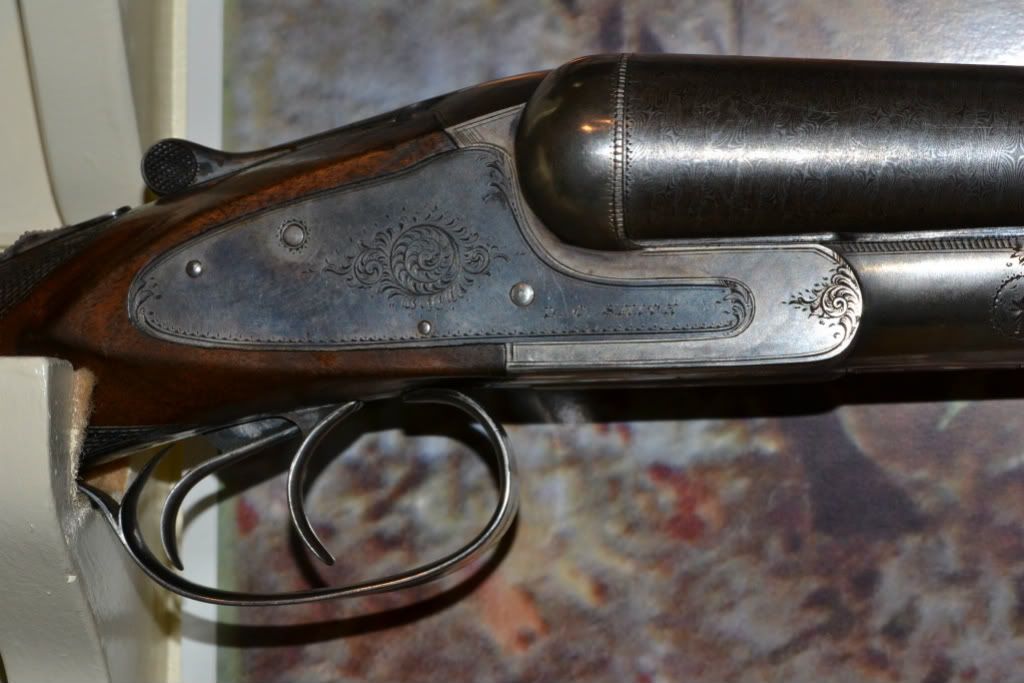
could it be that the billets of rolled steel were of a different alloy than the thinner bar stock? if so, that could account for the difference in how the case colors developed and appeared on the different parts of the gun?
|

|

|
|
|
03-09-2012, 08:56 AM
|
#12
|
|
Member
|
|
|
|
Member Info
|
Join Date: Nov 2008
Posts: 4,995
Thanks: 554
Thanked 15,715 Times in 2,677 Posts
|
|
EDG, if you will look in The Parker Story, the key reference books for Parker enthusiasts, you will see on p. 427 photos of frame forgings and explanation of the hammer forging process.
A person can learn a lot about Parkers, restorations including correct charcoal color case hardening, and what is correct in Parkers, by study of TPS, which was written by experts on the Parker gun and the Charles Parker Company.
Bruce Day, no expert but I've read a lot, learned a lot from experts and been fortunate to have been around a lot of nice Parkers.
|
|
|
|
|
The Following 5 Users Say Thank You to Bruce Day For Your Post:
|
|
|











 Linear Mode
