
|
 |
 |
||||||||||||||||||||||||||||||||||||||||||||||||||||||||||
| |||||||||||||||||||||||||||||||||||||||||||||||||||||||||||
 |
 |
 10-16-2009, 04:13 PM
|
#3 | ||||||
|

It would probably be HD Folsom They were in business for a long time and sold all kinds of guns.
http://www.gunbroker.com/Auction/Vie...Item=142944188 An interesting headline from the nyt 1900 SHOT BY HIS EMPLOYER; Head of H. & D. Folsom Arms Company Under Arrest. Says Second-Hand Revolver Was Accidentally Discharged --- Peter Koller, Wounded Man Now in Hospital. * July 3, 1900, Wednesday Page 5, 1057 words While examining a pile of old revolvers lying on a counter in the store of the H. D. Folsom Arms Company, at 314 Broadway, yesterday noon. Henry T. Folsom, the head of the firm, accidentally, shot and fatally injured Peter Koller, one of the salesmen. Koller, unconscious and in a dying condition, was taken to the Hudson Street Hospital. |
||||||

|

|
||||||
 |
 |
 |
|
|
|
10-16-2009, 04:17 PM
|
#4 | ||||||
|
Since I can't upload a scan, here is what hte letter says:
Mr. Cruz: Parker shotgun sn 45680 was ordered by N.D. Folsom and CO on 12/14/ 1885. According to PB, Order book no 20 it was a quality 0 top action hammer, 12 gauge. It featured plain twist steel barrels with a length of 30 inches. Its stock configuration was capped pistol grip. THe chokes were patterned RH (175 #8 pellets in a 30 " circle at 45 yards) and LH (175 #8 pellets in a 30 in circle at 45 yards). According to Parker Bros. Stock Book no. 16 its specifications were : lenghth of pul: 14 1/4 ", drop at hell; 2 7/8, wight: 7 pounds and 5 ounces. The price was $55. According to Order Book no 23. the gun was returned on 10/18/1888 by Dr. C.M. Burke Jr., in Norwalk, CT to replace the tumbler locks. THere was no charge. According to order book no. 96 the gun was retgurned on 12/27/1916 by Henry A. Burke in Cranberry Isle, Maine to repair lock and replace tumbler and sear. The charge was $2.00 |
||||||
|
|
|
||||||
|
|
|
|
|
|
10-16-2009, 04:18 PM
|
#5 | ||||||
|
N D Folsom was a hardware store in New Haven, Conn., long since closed I would imagine. Not sure what you mean about RH and LH chokes. Your letter would describe how the gun left the factory (barrel length, grade, maybe chokes) and to whom it was delivered.
|
||||||
|
|
|
||||||
|
|
|
|
|
|
10-16-2009, 04:20 PM
|
#6 | ||||||
|
|
||||||
|
|
|
||||||
|
|
|
|
|
|
10-16-2009, 04:22 PM
|
#7 | ||||||
|
I've hear NY and now CT. Anybody else want to chime in with their state?
 Maybe Mr. Conrad can assist. |
||||||
|
|
|
||||||
|
|
|
|
|
|
10-16-2009, 04:39 PM
|
#8 | ||||||
|
Jeff:
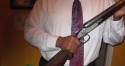
Your gun looks nice ! I have an almost identical gun (which also lettered as going to Folsom) that was made in 1886. (BTW: Does your gun have a standard dog's head buttplate, or does it say say something else ?) Although my gun is NOT fancy by any means, it is a very solid, well-made gun that I will never sell. I hunt & shoot trap with it often. If memory serves, my gun was "patterned" the same as yours. With 2 1/2" RST shells (3/4 or 7/8 ounce loads) - I can shoot trap all day long and only miss if I make a mistake. (...so each barrel must be giving at least modified performance, in my opinion). Have it checked out, then enjoy the hell out of it ! |
||||||
|
|
|
||||||
|
|
|
|
|
|
10-16-2009, 05:07 PM
|
#9 | ||||||
|
I ommitted the location of New Haven, CT. I'll send you another letter. I gave you the pattern information because it is there. The books don't list the ounces of shot in the shotshell so it it is hard to determine the actual choke unless it is spelled out in the order. I suspect your gun was full and full because the order does not specify choke. Note the pattern info is 45 yards not 40.
Mark |
||||||
|
|
|
||||||
|
|
|
|
|
|
10-17-2009, 10:57 PM
|
#10 | ||||||
|
Assuming a 1 1/8oz load there is 461 #8 pellets. This would give you a 38% pellet count at 45 yards. The chart that I have only goes up to 40 yards and a 40% pellet count is Cylinder choke at the 40 yard mark. The chart also shows pretty much a 20% decrease every 10 yards, so...we could extrapolate that it would be about skeet choke which is listed as 50% pattern at 40 yards and an extrapolated 40% pattern at 45 yards.
I had that gun listed as Mod/Cyl but it may have been with a galazan brass choke gauge (which will not be all that accurate seeing as the bores are probably not .730" )and not by the constriction. Next time you are into GM take the barrels in and have the gunsmith measure the choke constriction. Other than that you will need to shoot it at some paper at known distances. Good Luck, Kurt
__________________
Shooter and collector of Parker Shotguns |
||||||
|
|
|
||||||
|
|
|
 |
| Thread Tools | |
| Display Modes | |
|
|





 Linear Mode
