
|
 |
 |
||||||||||||||||||||||||||||||||||||||
| |||||||||||||||||||||||||||||||||||||||
 |
 |
 02-04-2017, 05:18 PM
|
#3 | ||||||
|

Ejector Hammer conundrum: I do not understand.
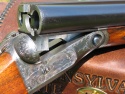
I have two parker reproductions. Both have splinter forearms, double triggers, and straight grip (no pistol grip). The 20 gauge was purchased new several years ago and the 12 ga before that used, but not abused. They have both been shot quite a bit on clays and game. On both guns the ejector hammers always look like the ones in the forend picture that started this thread. They look the same whether I remove the forend before or after pulling the triggers on a snap cap.Both guns eject empties 4 feet or more. The 12 ga forend is a snug fit but the 20 forend slips right on with no effort. I tried using the dowel to cock the 12 ejector hammers, but all that did was to cut the wood. It took a corner of a steel vise to cock the hammers. For the ejectors to work so well (like new) can it be that they are being cocked when the gun is fully assembled and broken open to load? That is all that I can conclude. Confused
__________________
DRSS,DWWC, Whittington Center, NRA Benefactor Life Member |
||||||

|

|
||||||
 |
 |
 |
|
|
|
02-04-2017, 07:05 PM
|
#4 | ||||||
|
If both guns do exactly the same thing, I doubt it's a mechanical problem identical with both guns. Do this
Open and close the gun a few times without touching the triggers or safety. Now with the gun closed, Do not do anything else except take the forend off. The hammers in the forend iron should be retracted. If they are, you should be able to put the forend back on the barrels with no problem. If the hammers are up, you have a problem that an experienced Parker gunsmith needs to look at. Let us know what you see. |
||||||
|
|
|
||||||
|
|
|
|
|
|
02-04-2017, 10:53 PM
|
#5 | ||||||
|

PaSxS,
Thank you the suggestion. I had done this afternoon just what you suggested and the hammers are always "up". Both guns were like this when I bought them! One new and the other used. The 20 ga forend slips in to place and locks easily with no effort. The 12 forend is a tighter fit, requiring me to place the curved end against the front of the receiver and press toward the receiver to get it to drop into place and lock.. The only part of the receiver that may be contacting the forend is a single pin . On the 12, I may be pressing on that pin, but that does not seem to be the case on the 20. Another question? What can I expect if I keep on shooting these guns as I have for decades? What can happen? Has anyone actually had a gun fail because of this? If so, in what way did it fail?
__________________
DRSS,DWWC, Whittington Center, NRA Benefactor Life Member |
||||||
|
|
|
||||||
|
|
|
 |
| Thread Tools | |
| Display Modes | |
|
|






 Hybrid Mode