|
| Notices |
Welcome to the new PGCA Forum! As well, since it
is new - please read the following:
This is a new forum - so you must REGISTER to this Forum before posting;
If you are not a PGCA Member, we do not allow posts selling, offering or brokering firearms and/or parts; and
You MUST REGISTER your REAL FIRST and LAST NAME as your login name.
To register:
Click here..................
If you are registered to the forum and keep getting logged
out: Please
Click Here...
Welcome & enjoy!
To read the Posts, Messages & Threads in the PGCA Forum, you must be REGISTERED and LOGGED INTO your account!
To Register, as a New User please see the Registration Link Above. If you are registered, but not Logged In, please Log in with your account Username and Password found on this page to the top right.
|
 |
16ga |
 |
 01-24-2026, 05:53 PM
|
#1
|
 Member
|
|
|
|
Member Info
|
Join Date: Nov 2008
Posts: 3,036
Thanks: 3,756
Thanked 13,483 Times in 2,061 Posts
|
|
 16ga
16ga
I copied this from FB, what say u??:
The 16-gauge didn’t disappear because it failed. It disappeared because the hunting world got louder. Caught between the brute certainty of the 12 and the easy handling of the 20, the 16 never begged for attention. It simply worked, quietly, season after season, teaching balance long before balance became something people talked about online.
This gauge was built for hunters who walked, not those who counted payload. It carried well, pointed naturally, and delivered patterns that rewarded timing rather than panic. With a 16-gauge, you couldn’t rely on excess shot to clean up late decisions. You had to mount clean, swing smoothly, and commit when the window was right. Miss the moment, and the gun didn’t argue with you. It reminded you.
That reminder is why many old hunters never let theirs go. The 16-gauge sits in a sweet spot where power is present but never overwhelming. Recoil is noticeable enough to demand respect, yet gentle enough to stay honest. It doesn’t encourage rushing. It encourages rhythm. It doesn’t flatten mistakes with force. It exposes them with clarity.
As modern hunting drifted toward extremes, the 16 gauge stayed centered. It never tried to be lighter than everything or stronger than everything. It asked one simple thing instead: that the hunter meet it halfway. Good footwork. Clean mounts. Real patience. Those who learned on the 16 learned to value flow over force, and judgment over noise.
The 16 gauge isn’t outdated. It’s unfashionable. And that distinction matters. It represents a time when hunters chose tools that shaped behavior rather than inflated confidence. In a world chasing edges and excess, the 16 gauge reminds us that balance is not a compromise—it’s a discipline.
The 16 gauge didn’t disappear because it failed. It disappeared because the world around it simplified. Hunters were told to choose sides—light or heavy, 20 or 12—and the middle was quietly abandoned. Not because it was wrong, but because it didn’t shout for attention.
What defines the 16 gauge is proportion. It carries more authority than a 20 without demanding the bulk of a 12. The payload feels purposeful, not excessive. Recoil is present, but measured. In the hands, the gun balances naturally, especially in classic field guns built before “modular” became a selling point. Nothing feels forced. Nothing feels trimmed down to make a category.
In the deer woods, the 16 gauge shines in places charts don’t measure. It moves smoothly through cover. It settles quickly on target. With slugs or appropriate loads, it delivers clean results at realistic distances without the fatigue that often follows heavier gauges. The experience feels deliberate rather than defensive.
The reason many hunters never tried the 16 is simple: it requires context. It doesn’t dominate a spec sheet. It doesn’t promise extremes. Instead, it rewards hunters who already understand their distances, their angles, and their patience. The 16 doesn’t rescue rushed decisions—but it doesn’t punish thoughtful ones either.
This is why those who discover the 16 late often ask the same question: why did we skip this? Not because it outperforms everything else, but because it fits so well that it fades from focus. And when a tool disappears, judgment takes over.
The controversy around the 16 gauge isn’t about effectiveness. It’s about relevance. In a world obsessed with fewer choices, the 16 reminds hunters that balance used to be the goal—not a compromise.
Choose the 16 gauge if you want the steadiness of a 12 without its weight, and the handling of a 20 without giving up authority. It’s ideal for hunters who value proportion over popularity and performance over packaging. The 16 gauge isn’t forgotten because it’s obsolete. It’s forgotten because it refuses to fit into simple arguments. And that may be exactly why it still works.
|

|

|
|
The Following 47 Users Say Thank You to Craig Larter For Your Post:
|
Alex Brushwein, Alfred Houde, allen newell, Benny Keith, Bill Jolliff, Bob Jurewicz, Bob Kimble, Chris Pope, Chris Robenalt, Clark McCombe, Dan Steingraber, Daryl Corona, Dave Tatman, David Noble, Dean Romig, Dean Weber, Donald McQuade, Garry L Gordon, Gary Carmichael Sr, Gerald McPherson, Ian Civco, J. Scott Hanes, James B Prudente, JAMES HALL, James L. Martin, Jeff Kuss, Jerry Harlow, Jim Beilke, Joe Dreisch, Josh Loewensteiner, Karl Ferguson, Keith Doty, Ken Hill, Kenny Graft, Mike Koneski, Mitchell Nahra, Paul Ehlers, Pete Kappes, Phil Cloninger, Reggie Bishop, Robert Brooks, Scott Smith, Stephen Hodges, Timothy Salgado, TOM DAMIANI, tom leshinsky, William Woods |
|
|
01-24-2026, 06:21 PM
|
#2
|
|
Member
|
|
|
|
Member Info
|
Join Date: Jun 2009
Posts: 431
Thanks: 788
Thanked 571 Times in 213 Posts
|
|
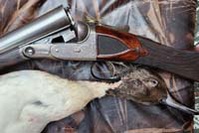
Excellent Craig, I have 4 of them all doubles, had a nice model 12 until an I got talked out of it. my father always said, a 16 will kill anything that flies. They are my main waterfowl and pheasant shotguns.
|
|
|
|
|
The Following 3 Users Say Thank You to Jim Beilke For Your Post:
|
|
|










 Linear Mode
