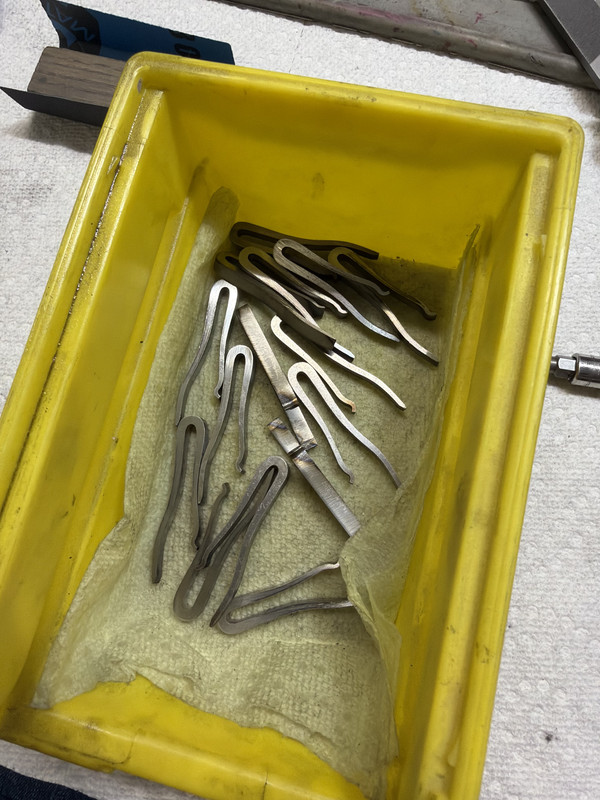
The Parker ejector design is a bit over engineered and without the right tools and knowledge they’re best left for professionals. Even then they can be very frustrating, especially if the roll joint and sear legs are not correct.
Hammers and combination sears get worn and break occasionally, but debris and corrosion is often the culprit for malfunctions. It can be difficult to get all the junk out that accumulates between the hammers and sears without totally disassembling them. Gun scrubber or break parts cleaner is good, ultrasonic cleaning is also good, but sometimes you have to break them down to get all the crud out.
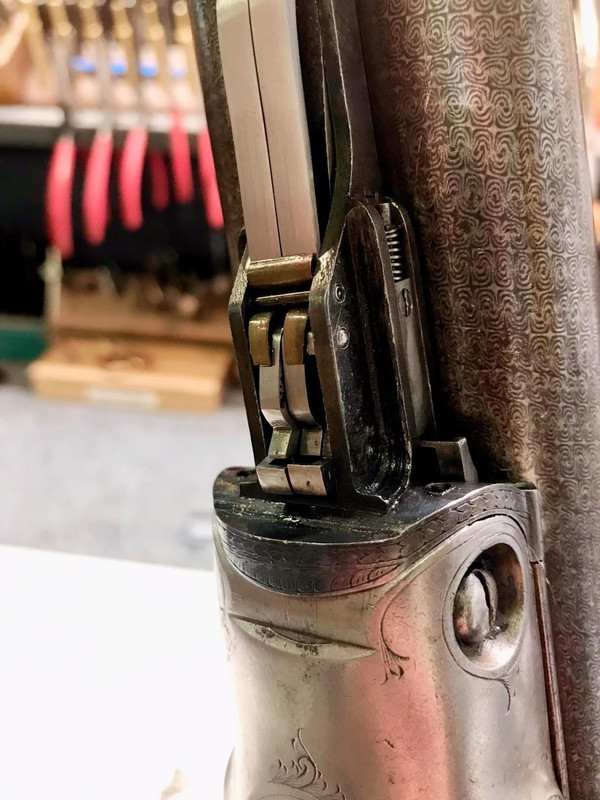
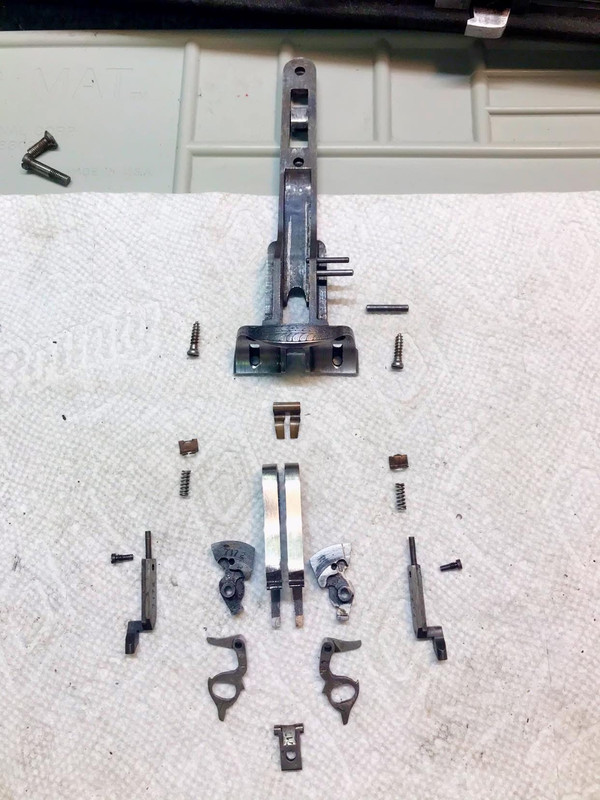
Once you have them apart you should check the combo sear and notch in the hammer for any chips, rounded edges, burrs, etc. The upper notch holds the hammers from falling when you remove the iron from the unfired gun. The lower notch holds the hammer for ejecting fired hulls, the legs of the combo sears make contact on the roll joint in the frame and this is what trips the hammers when you open the fired gun. The surfaces are quite small and under magnification you can see the relationship much better.
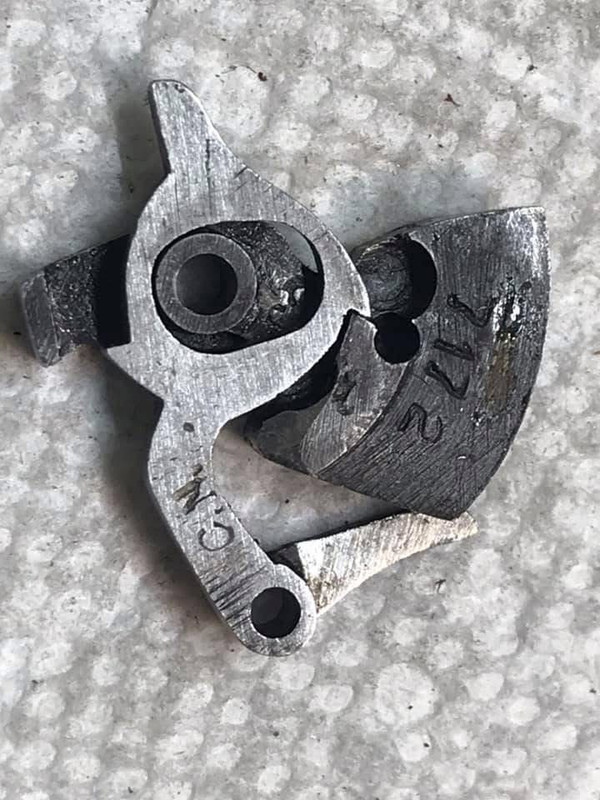
Lightly lubricate them both and then be sure the sear slides are also clean and free to move. The sear slide springs have a tendency to take a set and get weak, sometimes they need to be replaced. The sear slide screw also will break off and if this happens it cannot push the combo sear down into position to hold the ejector hammers properly. The little copper sear spring also needs some adjusting from time to time. These don’t seem to be heat treated springs, just bent copper with a bit of tension memory in the metal. The legs will flatten out and quit pushing the combo sear properly.
Ejector parts are getting harder to find and we just finished making a sample batch of new ejector hammer springs for testing. We grind them in left and right pairs and after some additional testing we will offer them for sale. We CAD modeled them using average dimensions from a handful of original factory springs we had. They’re heat treated 1095 spring steel and so far they’re working exactly like we expected.